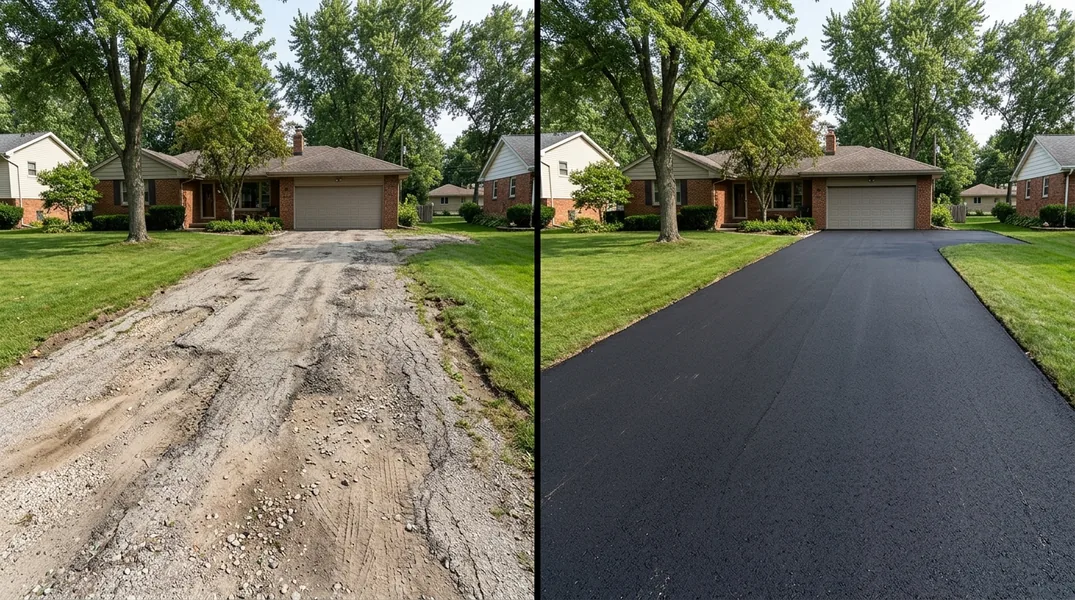
Why South Bend Driveways Face Unique Winter Threats
If you live in South Bend, you know winter is no joke. The region's proximity to Lake Michigan creates a perfect storm of weather conditions that wreak havoc on asphalt driveways year after year. Lake-effect snow dumps heavy precipitation in short bursts, while the freeze-thaw cycle repeatedly expands and contracts your asphalt, creating cracks, potholes, and structural damage that can compromise your entire driveway in just a few seasons.
Most homeowners don't realize that the damage starts small. A hairline crack in November might seem harmless, but when water seeps into that crack, freezes, and expands, it forces the asphalt apart. By spring, that tiny crack has become a network of fissures. Repeat this cycle dozens of times over a winter season, and you're looking at serious deterioration. This is why driveways in South Bend and surrounding areas like Mishawaka often need attention much sooner than driveways in milder climates.
Understanding the Freeze-Thaw Cycle and Its Impact
The freeze-thaw cycle is the primary culprit behind premature driveway failure in northern Indiana. Here's how it works: during the day, temperatures rise above freezing and melt snow or ice. Water seeps into existing cracks and pores in your asphalt. When temperatures drop at night, that water freezes and expands by about nine percent. This expansion puts enormous pressure on the asphalt surrounding it. Over weeks and months, this repeated pressure weakens the structural integrity of your driveway, leading to spalling, cracking, and eventually potholes that require Pothole Repair & Asphalt Patching.
What makes this process so destructive is that it happens invisibly. You might not notice significant damage until spring arrives and you see the full extent of the problem. By then, what could have been addressed with preventive maintenance now requires more extensive (and expensive) repairs. This is why homeowners who invest in quality Asphalt Driveway Paving & Installation with proper materials and installation techniques see their driveways last significantly longer than those installed with shortcuts or substandard materials.
Recognizing the Signs of Winter Damage
After a harsh winter, knowing what to look for can help you catch driveway problems early. The most common signs of freeze-thaw damage include alligator cracking (a pattern of interconnected cracks resembling alligator skin), edge cracking along the perimeter of your driveway, and potholes that seem to appear overnight. You might also notice that certain areas of your driveway have begun to sink or settle unevenly, which is a sign that the base layer has been compromised by water infiltration.
Another telltale sign is the presence of white residue or salt staining on your asphalt, which indicates that de-icing salts have penetrated the surface and are accelerating deterioration. If you notice any of these issues, it's time to call a professional. Ignoring these warning signs will only lead to more extensive damage and higher repair costs down the line. When you see problems developing, reach out to South Bend Asphalt Paving at (574) 314-1280 or request a free estimate to assess the situation.
How to Choose a Paving Contractor and Avoid Leftover Asphalt Scams
One of the biggest challenges homeowners face when they need driveway work is figuring out how to choose a paving contractor they can trust. Unfortunately, the asphalt paving industry has its share of disreputable operators, and understanding the red flags can save you thousands of dollars and prevent you from ending up with a substandard driveway that fails within a year or two.
The leftover asphalt scam is particularly common in spring, when contractors have leftover material from large commercial projects. They approach homeowners offering to pave their driveways at deeply discounted rates because they need to get rid of excess asphalt. While this might sound like a great deal, there are serious problems with this approach. First, leftover asphalt has often been sitting in trucks for weeks, which degrades its quality and binding properties. Second, contractors using this material have no incentive to do quality work because they're not concerned about their reputation on that particular job. Third, the asphalt may not be appropriate for your specific climate or soil conditions. The result is a driveway that looks decent initially but fails rapidly, often within one or two winters.
To avoid driveway paving scams, ask detailed questions to any contractor before hiring them. Verify that they're insured, and bonded. Ask about the specific type and grade of asphalt they'll use, the thickness of the application, and whether they'll prepare the base properly. Request references from recent projects in your area, and don't hesitate to call those references and ask about their experience. A legitimate contractor will welcome these questions and provide detailed, verifiable answers.
Questions to Ask Your Paving Contractor Before Signing
Before you hire anyone to work on your driveway, you should have a clear conversation about their process, materials, and guarantees. Here are the key questions to ask paving contractor representatives: What is the mix design of the asphalt you'll be using, and can you provide documentation of its specifications? How thick will you apply the asphalt, and will you compact it properly? Will you seal the driveway after installation, and if so, when and what product will you use? How long is your warranty, and what does it cover? Can you provide at least three references from projects completed in the last year?
Additionally, ask about their experience with the specific weather challenges in our region. Contractors who have worked extensively in northern Indiana understand the unique demands of lake-effect snow and freeze-thaw cycles. They know that proper drainage, adequate base preparation, and quality materials are non-negotiable if your driveway is going to survive our winters. Ask whether they recommend Asphalt Resurfacing & Overlay if your driveway is showing age but still has a solid base, or whether a complete replacement is necessary. A professional contractor will give you an honest assessment rather than pushing the most expensive option.
Asphalt Driveway Paving & Installation Cost in South Bend: What to Budget
Homeowners naturally want to know what they'll pay for quality driveway work. The cost of Asphalt Driveway Paving & Installation varies based on several factors, including the size of your driveway, the condition of the existing base, local material costs, and the complexity of the job. Rather than searching for a generic price online, it's far more useful to get a detailed quote from a local contractor who understands South Bend market conditions and can assess your specific situation.
When comparing pricing from different contractors, don't automatically choose the lowest bid. The cheapest option often reflects lower quality materials or corners cut on preparation and installation. A reputable contractor will provide a detailed breakdown of costs, including base preparation, asphalt material, labor, compaction, and finishing work. They should also discuss whether sealcoating is included and how often you should have it reapplied to protect your investment. Contact South Bend Asphalt Paving at (574) 314-1280 to discuss your project and receive a transparent quote that explains exactly what you're paying for.
Protecting Your Driveway: Maintenance Tips for Winter
While choosing the right contractor for installation is crucial, ongoing maintenance is equally important for extending your driveway's lifespan. Seal coating your asphalt every two to three years creates a protective barrier against water infiltration, UV damage, and chemical exposure from de-icing salts. This relatively inexpensive maintenance step can add years to your driveway's life and prevent the kind of deep damage that leads to costly repairs.
During winter, try to minimize the use of harsh de-icing salts on your driveway if possible. Rock salt accelerates the freeze-thaw process and chemically breaks down asphalt. If you must use de-icing products, consider calcium chloride or magnesium chloride, which are less damaging than rock salt. Keep your driveway clear of standing water and debris, which can trap moisture and accelerate deterioration. If you notice small cracks developing, have them filled promptly before water can penetrate deeper into the asphalt. Small Driveway Repair work now can prevent major problems later.
Taking Action: Get Your Driveway Assessed Today
If your driveway has survived another brutal South Bend winter and you're concerned about its condition, now is the time to take action. The longer you wait, the more damage the freeze-thaw cycle will inflict, and the more expensive your eventual repairs will be. South Bend Asphalt Paving has the experience and expertise to assess your driveway accurately and recommend the right solution, whether that's preventive seal coating, targeted repairs, or a complete replacement.
Don't fall victim to leftover asphalt scams or unqualified contractors. Reach out to South Bend Asphalt Paving today at (574) 314-1280 or request a free estimate online. We'll evaluate your driveway, answer all your questions, and provide you with a detailed, honest assessment of what your driveway needs to withstand many more winters to come. Your driveway is a significant investment in your home's curb appeal and functionality. Protect it with quality workmanship and materials from a contractor who understands the unique challenges of our region.
Looking for a professional asphalt paving contractor in South Bend? South Bend Asphalt Paving responds fast for all your asphalt paving needs.
Get a Free Quote