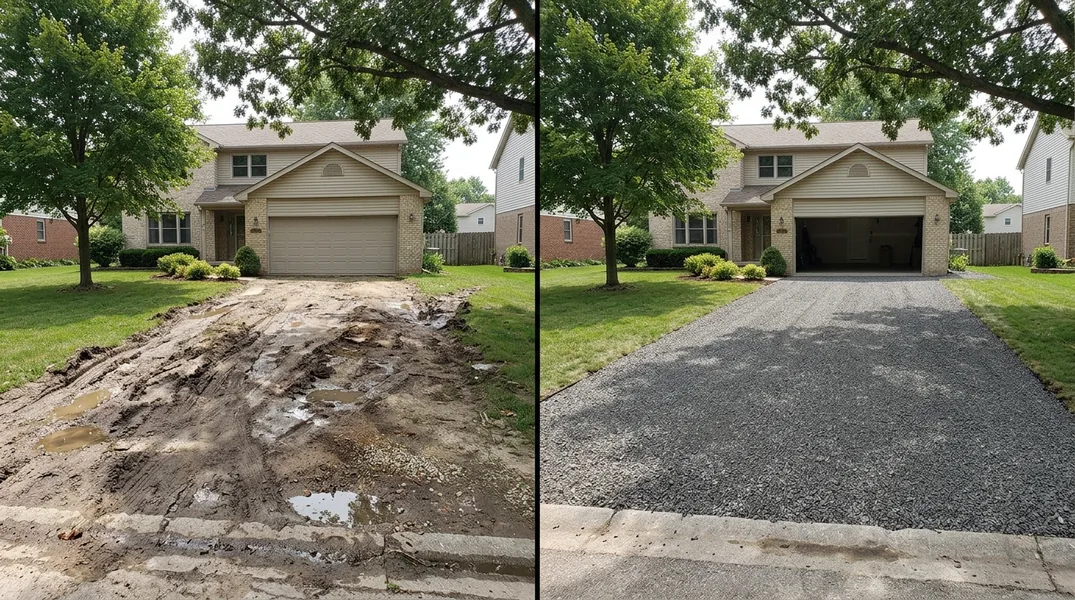
Understanding South Bend's Glacial Soil Foundation
If you live in South Bend, you're building on one of the Midwest's most challenging soil types: glacial deposits left behind thousands of years ago. During the last ice age, massive glaciers carved through Indiana, and when they retreated, they left behind a complex mix of clay, silt, sand, and rocks. This glacial soil is notoriously unstable when exposed to freeze-thaw cycles, making it the primary culprit behind many driveway failures in our region.
The problem isn't the soil itself, but how it behaves under moisture and temperature stress. Glacial clay, in particular, expands when it absorbs water and contracts when it dries. In South Bend's climate, where winters bring freezing temperatures and spring thaws saturate the ground, this expansion and contraction cycle happens repeatedly. Your driveway sits directly on top of this unstable foundation, which means the base layer shifts, settles unevenly, and creates stress on the asphalt above. Understanding this geological reality is the first step toward making smart decisions about your driveway's longevity.
Frost Heave and Driveway Damage: The South Bend Effect
Frost heave is the enemy of every Asphalt Driveway Paving & Installation project in northern Indiana. This phenomenon occurs when water in the soil freezes and expands, pushing the ground upward with surprising force. In South Bend, where winter temperatures regularly drop below freezing and spring moisture levels spike, frost heave creates a perfect storm for driveway deterioration. Homeowners often notice this as a subtle buckling or heaving in their driveway surface during late winter or early spring, followed by cracking and settling as the ground thaws.
The damage from frost heave doesn't stop at surface cracks. When the soil beneath your driveway shifts upward unevenly, it creates stress points in the asphalt. Some sections rise while others remain stable, putting the pavement under tension. As temperatures warm and the soil settles back down, gaps form between the asphalt and its base. Water seeps into these voids, accelerates deterioration, and the cycle repeats. Over time, this leads to the formation of potholes, alligator cracking, and structural failure that often makes Driveway Repair necessary rather than optional.
Pothole Repair and Asphalt Patching: Temporary Fixes or Long-Term Solutions?
Pothole Repair & Asphalt Patching can extend your driveway's life when damage is caught early and the underlying base remains stable. A professional patching job fills the void, compacts new asphalt, and seals the repair to prevent water infiltration. For homeowners facing one or two isolated potholes, patching is cost-effective and practical. However, the key question is whether the problem is localized or systemic. If your driveway shows multiple potholes across different areas, develops new cracks every spring, or has sections that consistently heave more than others, patching may only delay the inevitable.
The truth about pothole repair in regions with glacial soil is that it addresses the symptom, not the cause. If the base layer is compromised by frost heave or poor drainage, patching one hole won't prevent others from forming. Many South Bend homeowners find themselves calling for repairs year after year, only to watch new damage appear in different spots. This pattern suggests the foundation itself needs attention. A qualified asphalt contractor can assess whether your driveway is a candidate for targeted patching or whether a more comprehensive approach like Asphalt Resurfacing & Overlay would serve you better over the long term.
Repair or Replace Asphalt Driveway: Making the Right Call
The decision between repair and replacement depends on several factors specific to your driveway's condition and age. If your driveway is less than 10 years old and shows isolated damage from frost heave, repair may be sufficient if the base layer is still structurally sound. A professional inspection can reveal whether the subgrade has settled significantly or if water is pooling beneath the surface. If the base is intact and damage is confined to the top layers, Asphalt Resurfacing & Overlay can restore functionality and appearance without the cost of full replacement.
However, if your driveway is 15 to 20 years old, shows widespread cracking, or has experienced multiple rounds of patching, replacement may offer better long-term value. A new installation allows contractors to address the root cause: the base layer. A properly engineered base with improved drainage, compaction, and potentially a geotextile layer to manage soil movement can dramatically reduce frost heave damage. While replacement costs more upfront, it eliminates the cycle of repeated repairs and provides 15 to 20 years of reliable service. The pricing difference between ongoing repairs and a new installation often narrows when you factor in labor, material costs, and the time required for multiple service calls over several years.
Building a Durable Driveway Base in Glacial Soil
Successful Asphalt Driveway Paving & Installation in South Bend requires more than standard installation practices. Contractors familiar with glacial soil understand that the base layer is everything. A quality installation begins with proper site preparation, including removal of unstable topsoil and clay. The subgrade is then compacted to eliminate air pockets that trap water. A well-draining base layer, typically composed of crushed limestone or recycled asphalt, allows water to move away from the driveway rather than accumulate beneath it. This is critical in our region, where spring snowmelt and heavy rains saturate the ground.
Additional protective measures include grading the driveway slightly to encourage surface runoff and installing edge drains or perimeter swales to direct water away from the foundation. Some contractors also use geotextile fabrics between the subgrade and base layer to prevent soil migration while maintaining drainage. These details add modest cost to the initial installation but pay dividends by preventing the frost heave and water-related damage that plagues poorly constructed driveways. When you invest in Asphalt Driveway Paving & Installation, choosing a contractor who understands glacial soil challenges ensures your investment lasts.
When to Call South Bend Asphalt Paving for a Professional Assessment
If you're noticing early signs of driveway damage such as small cracks, slight heaving, or water pooling in certain areas, now is the time to call for a professional evaluation. South Bend Asphalt Paving offers a free inspection to assess your driveway's condition and recommend the most cost-effective solution. A trained technician can determine whether your driveway's issues stem from frost heave, poor drainage, age-related wear, or a combination of factors. This assessment takes the guesswork out of deciding between patching, resurfacing, or full replacement.
Don't wait until small problems become expensive ones. Early intervention often prevents the need for major reconstruction. Whether you need Pothole Repair & Asphalt Patching, resurfacing, or a complete new installation, South Bend Asphalt Paving has the expertise to handle your glacial soil challenges. Contact us today at (574) 314-1280 or request a free estimate to learn what's best for your property. Our team understands the unique demands of building and maintaining driveways in South Bend's climate and soil conditions, and we're ready to help you make an informed decision.
Looking for a professional asphalt paving contractor in South Bend? South Bend Asphalt Paving responds fast for all your asphalt paving needs.
Get a Free Quote